We are pleased to send you the 80th issue of the NCCR MARVEL newsletter
Home    /    Highlights    /    News    /    Events
Newsletter - July 31, 2026

Dear MARVEL'ers,

The NCCR MARVEL is coming to an end; please find below our last newsletter, with highlights and news linked to the MARVEL community.

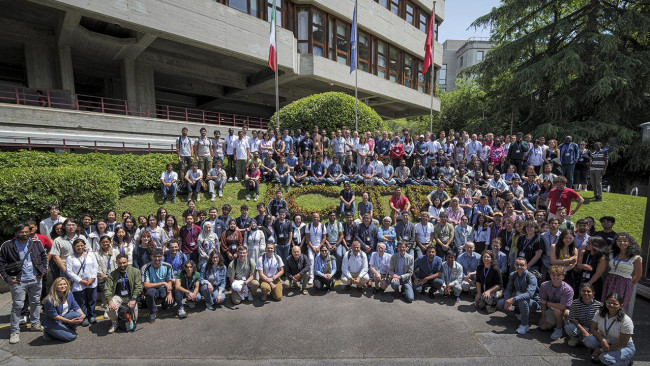
This month's highlight unveils Pheasy, a new open-source code to drive and simplify complex phonon simulations. Discover how MARVEL was also a subject of investigation through the lens of the social sciences. To conclude the MARVEL journey, you can read about the closing events which took place in June and July. The two-week MARVEL-ICTP college in Trieste was a great success, bringing together more than 200 graduate students and early-career researchers from 57 countries to learn about and explore the state of the art in computational materials science in the era of AI. And our final event, “MARVEL Fest: Party-ing away”, at EPFL was an extraordinary opportunity to meet, celebrate, and share the scientific advancements of the project.

Finally, a party-ing word from Nicola Marzari:

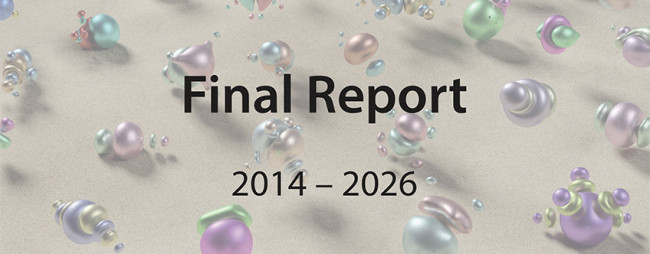
It’s been an intense and exciting 12 years — even 14, if we consider our pre-proposal and the HP2C support that allowed us to start brainstorming together. We leave behind many happy memories; possibly, the happiest ones come from reflecting on the difference we made in the lives of many students and researchers in Switzerland and all over the world. It’s a testament to the generosity and the extremely forward-looking attitude of the Swiss National Science Foundation that we were allowed to drive so many initiatives that helped and supported new generations of scientists and many under-represented communities. The ICTP-MARVEL College and the final event at EPFL summarized and showcased this beautifully — but the long and winding road included two outstanding Psi-k conferences in 2022 and 2025, each of them with more than 1,300 in-person participants — including the best childcare and after-dinner parties ever seen in science. The final slides (MARVEL Vision, MARVEL Science, and MARVEL Outreach and Legacy) and the final report summarize everything that has happened in these years — do have a look at them, and peruse to your heart’s content.

Last, I would like to recall a couple of core points. First — the vision of MARVEL remains as fresh and even more powerful than when we started — all the major internet companies and myriad start-ups are deeply invested in materials discovery; the US, with the Genesis Mission, and the EU, with the Advanced Materials initiative, have squarely put materials and materials discovery at the core of societal well-being. Second, we had 50M CHF to implement this vision over 12 years. This is what, across the pond, would be called a slam dunk — yet, while the results were good, research-wise, it still reads like a missed opportunity. Why this is so is explained in the conclusions of the final report, but perhaps the lesson I often repeat is that — for all the infinite merits and strengths of the Swiss scientific ecosystem — we remain overpaid and overfunded, and often ferociously top-down, while other communities elsewhere are more driven, more streamlined, more bottom-up, and more hungry.

So, stay hungry, stay foolish.

Nicola Marzari
Highlight

New Open-Source Tool Simplifies Complex Phonon Simulations

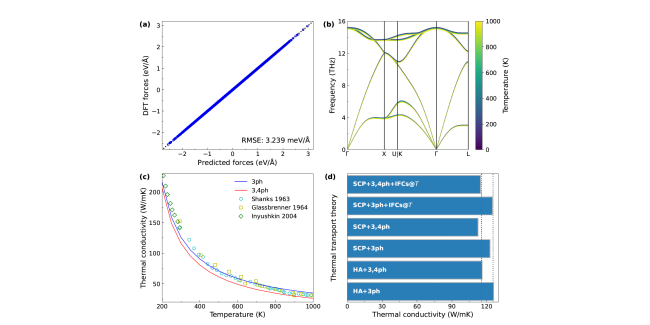
MARVEL researchers have unveiled Pheasy, a new open-source computational platform designed to make advanced simulations of atomic vibrations in crystalline materials more accurate, efficient, and accessible. Understanding these vibrations is essential for the development of next-generation materials used in electronics, energy, quantum technologies. As demand for materials with tailored thermal, mechanical, and electronic properties continues to grow, computational tools like Pheasy have the potential to accelerate the discovery and optimisation of novel materials by enabling researchers to explore complex phonon- mediated physical phenomena that were previously too computationally demanding to investigate routinely. The software is described in npj Computational Materials.

Read MARVEL Highlights and Success stories here

MARVEL as a subject of investigation

When scientists become the subject of research: MARVEL through the lens of the social sciences

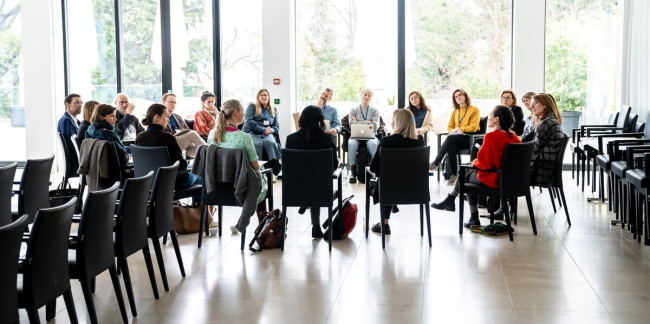
Our NCCR was among the research organisations studied by  the INTERSECTIONS project, funded by the Swiss National Science Foundation (SNSF) and focussing on how interdisciplinary and transdisciplinary research is shaped by the interaction of research practices, knowledge cultures, and institutional policies. In particular, a doctoral study at ETH Zurich has used MARVEL as a case study to investigate how institutional norms, governance processes, and organisational practices shape collaborative research.

MARVEL Fest: party-ing away

MARVEL ends, leaving behind a lasting community and a vibrant research field

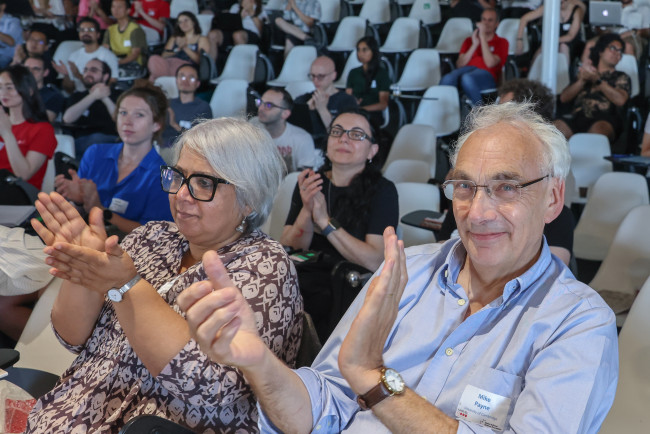
It was in equal parts scientific conference, family reunion, and straight up party. MARVEL’s final event, on 9th July in Lausanne, brought together current and former members of the community created by the Swiss National Centre of Competence in Research, launched in 2014 and wrapping up its activities this year. And rather than just looking back and taking stock of the many things done, it became an opportunity to look forward – to the future of the field, and to new ways to keep the community together.

Back to the MARVEL-ICTP College: Materials simulations in the age of AI

Materials simulations beyond borders

A two-week school on computational materials science supported by the Swiss National Science Foundation and organized by MARVEL and ICTP attracted a record number of international participants (reposted from the ICTP website). 

A highly successful materials simulation college in Trieste

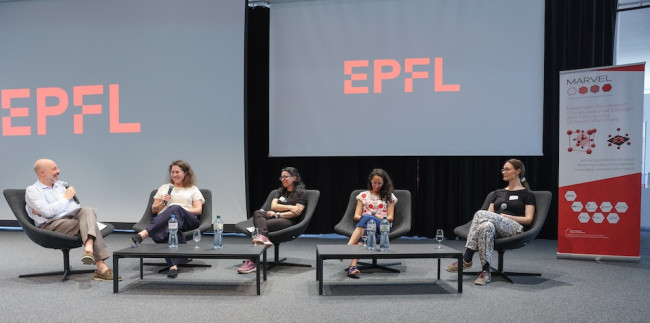
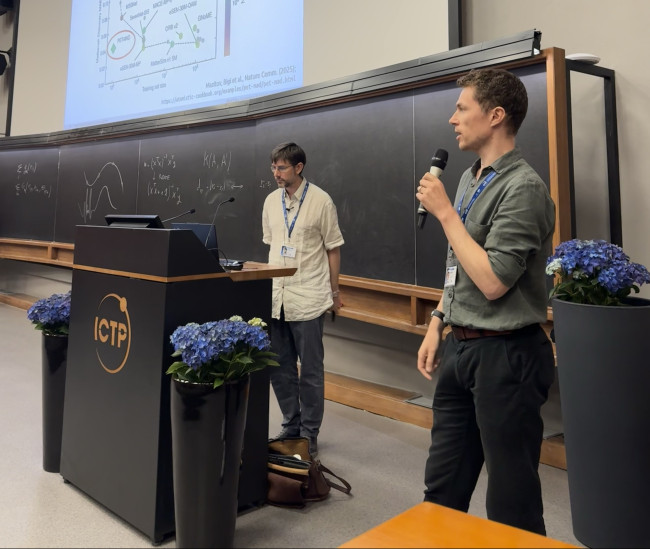
The two-week college on “Materials Simulations in the Age of AI” aimed to bring together graduate students and early-career researchers from all over the world to learn and explore the state-of-the-art in computational materials science in the era of AI, and to forge the next generation of researchers in the field. It was organized by the Abdus Salam International Centre for Theoretical Physics (ICTP) and NCCR-MARVEL. The slides and lecture recordings are available online. And as says Edward Linscott in an interview, one of the most rewarding parts of the course was to watch MARVEL codes in action. 

Reading MARVEL final report

MARVEL final report

The MARVEL final report, covering the 12 years of the project, is available on the website. As mentioned by Nicola Marzari in the executive summary, the overall summary is that MARVEL had and still has exactly the right mission, drive, and ambition. It certainly showed, like many efforts worldwide, that materials can be discovered faster when theory, algorithms, high-performance computing, data, machine learning and experiments are tightly connected. Importantly, it kept pushing an agenda of open-source codes, open-access data, and of much needed verification efforts — often remarkably missing in a field that produces tens of thousands of papers per year. It produced new scientific knowledge, built digital tools used far beyond the consortium, trained a new generation of researchers, widened participation, and created lasting structures that strengthen Switzerland's position in computational materials science.

Follow MARVEL
on X @nccr_marvel
and on LinkedIn

You are receiving this newsletter because you have shown interest in NCCR MARVEL activities
Unsubscribe from this newsletter - Newsletter Archives
NCCR MARVEL / EPFL STI PRN-MARVEL / Station 9 / 1015 Lausanne / Switzerland