MARVEL Junior Seminar — December 2025
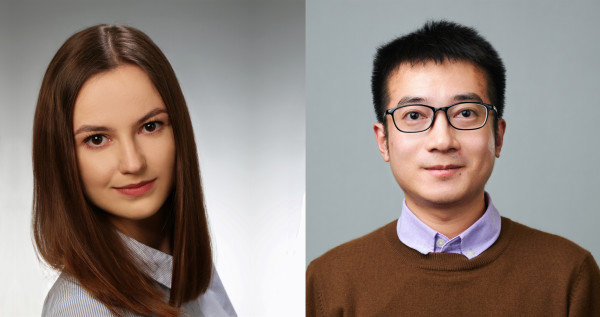
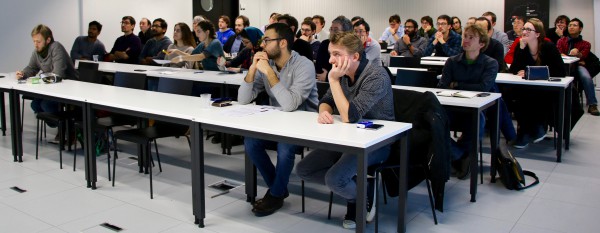
Each seminar consists of two presentations of 25 minutes each, allowing to present on a scientific question in depth, followed by time for discussion. The discussion is facilitated and timed by the chair.
Pizzas will be served after the seminars in order to facilitate discussions based on the talks just presented.
Onsite participation
12:15 — Seminars take place in EPFL room Coviz2 (MED 2 1124)
~13:15 — Pizzas will be served in the MED building atrium, second floor
Online participation
Starting at 12:15:
https://epfl.zoom.us/j/69035070989
Password: 334085
Abstracts
Talk 1 — Computationally Engineered BCC Refractory HEAs for Extreme Environments
Julia Chmielewska, Christian Leinenbach
Advanced Materials Processing, Empa
Refractory Hf–Mo–Nb–Ti high-entropy alloys (HEAs) were designed and experimentally validated to establish composition–property relationships essential for high-temperature applications. Thermodynamic simulations guided the selection of two single-phase BCC alloys, Hf₄₅Mo₂₀Nb₁₅Ti₂₀ and Hf₂₀Mo₁₅Nb₃₀Ti₃₅, both exhibiting wide BCC stability ranges and melting points near 2000 °C . Micropillar compression and micro-tensile tests revealed high yield strengths of 1.3–1.6 GPa, with composition-dependent critical resolved shear stresses governed by solute misfit and lattice distortion. Slip-trace analysis confirmed activation of {110}⟨111⟩ and {112}⟨111⟩ BCC slip systems. Despite their high strength, cube-corner nanoindentation up to 2 N produced no cracking, indicating unexpectedly high ductility and toughness for refractory alloys. Alloy I, enriched in Hf and Mo, showed higher CRSS and hardness, whereas Alloy J exhibited smoother plastic flow and greater pile-up, reflecting easier dislocation glide. These results provide mechanistic insight for designing crack-resistant, high-strength BCC HEAs suitable for extreme-temperature applications.
Talk 2 — Towards large-scale simulations of phonon spectra and related thermomechanical properties
Changpeng Lin, Nicola Marzari
Laboratory of Theory and Simulation of Materials - THEOS, EPFL
Lattice vibrations (or phonons) are one of the most fundamental degrees of freedom in condensed matter, underpinning technological applications that have shaped everyday life, such as heat dissipators, solar cells, and light-emitting diodes. Conventional first-principles calculations of lattice dynamics become challenging and often infeasible when going beyond third-order anharmonicity, due to the combinatorial explosion in the number of higher-order interatomic force constants. In this talk, I will present our recent progress in enabling automated, large-scale simulations of phonon spectra and related thermomechanical properties from first principles. I will first introduce a robust and user-friendly program, Pheasy [1], which has been developed to accurately reconstruct the potential energy surface of crystalline solids via a Taylor expansion of arbitrarily high order. Given force-displacement datasets, the program allows an efficient and accurate extraction of interatomic force constants (IFCs) using advanced machine-learning algorithms, and further calculates a wide range of harmonic and anharmonic phonon related properties. In the second part, I will show how the obtained IFCs have been successfully applied to study anharmonic lattice dynamics, thermal transport, and inelastic neutron and X-ray scattering spectroscopies. The developed computational approach is then applied to the high-throughput computation of harmonic phonon and thermomechanical properties for bulk and two-dimensional materials. Overall, the presented project aims to create a phonon code ecosystem that connects diverse phonon simulation platforms and offers access to the broad research community.
[1] C. Lin, J. Han, B. Xu, and N. Marzari, First‑Principles Phonon Physics using the Pheasy Code, arXiv:2508.01020 (2025)
Check the list of the next MARVEL Junior Seminars here.